
Scatter symbols are the single most trustworthy way a slot can escape its base-game rhythm and offer a concentrated payout or a free-spin sequence that multiplies your original stake. Because they generally pay anywhere on the reels and unlock bonus rounds, knowing how they function helps you judge whether a game’s advertised RTP is realistic and whether its volatility suits your session goals. This article analyzes the mechanics, payout structures, and decision points that shape whether chasing scatter-triggered features is genuinely worth the time and money you place on the reels.
Scatter signs versus standard pay symbols

Regular pay symbols must land on adjacent reels based on a fixed payline or a ways-to-win pattern, whereas scatter symbols assess their positions across the entire grid. This difference is significant because scatters do not require line alignment, which means a single spin can produce both line wins and scatter payouts at the same time. In practice, the separation allows developers balance small, frequent line hits with rarer but larger scatter awards without crowding the paytable.
When you open any paytable you will notice that scatters usually carry their own multiplier ladder. Three scatters might return 2× total bet, four scatters 10×, and five scatters 50×. These multipliers exist outside the reel window’s line-win calculations, so they do not replace existing symbols or consume paylines. The result is a second, independent reward stream that you can track separately from your base-game variance.
Wild-scatter hybrids and expansion symbols
Some slots merge the scatter attribute with the wild mechanic, generating a symbol that both substitutes for others and triggers when two or more land anywhere. The hybrid decreases reel density because one icon fulfills two duties, yet it also boosts volatility because the same symbol must now show up for both substitution and the scatter payout. Anticipate these hybrids in games that promote “win both ways” systems.
Enlarging scatters enlarge to fill an entire reel when they appear, then stay in place for a re-spin or the duration of a free-spin round. The expansion guarantees at least one additional reel filled, improving the odds of hitting high-value line wins. Because the expansion occurs after the initial spin evaluation, players get two distinct payout computations on the same spin. visit the official website
Bonus spins activated by scatters
Many modern slots utilize three or more scatters to give a batch of free spins rather than a one-time multiplier. The free-spin count is often fixed—commonly 8, 10, or 12 rounds—yet some games adjust the number with the exact scatter count. Four scatters could add two extra spins over the three-scatter baseline, offering players a direct incentive to anticipate the fuller trigger.
Re-trigger mechanics
During free spins the same scatter symbol can appear again and grant additional rounds. Re-trigger rules vary: some titles restrict the total at 20 spins, others enable unlimited extensions. Because each re-trigger increases the value of the original trigger, the mathematical ceiling of a session can grow quickly even if the base bet is modest.
Multiplier ladders inside free spins
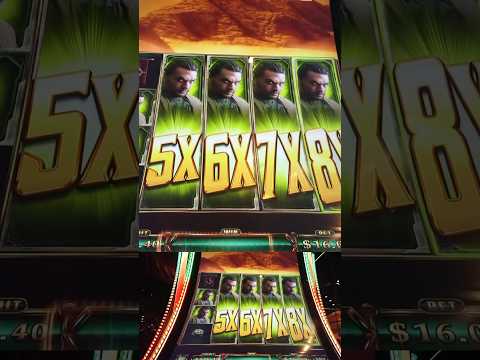
Inside the bonus, scatters may also feature progressive multipliers that influence every line win. A meter might start at 1× and increase by 1× for every new scatter, reaching 5× after five appearances. The meter clears only when the free-spin sequence ends, so later spins inside the same bonus become significantly more valuable than the opening spins.
Wager range, RTP, and the cost of waiting for scatters
Common minimum bets on five-reel scatter slots are from 0.20 credits and increase to 100 credits on the high side. Within that range the RTP is unchanged, so the decision to up the wager is purely a question of volatility tolerance rather than payout percentage. However, the absolute cost of reaching the scatter bonus increases in line with the bet, which is relevant when a title has a 4 percent hit rate for its feature.
Players who want to quantify the wait can divide their session budget by the average cost per feature. At a 0.20 minimum bet and a 4 percent trigger rate, the expected cost per bonus is 5.00 credits. Increasing the stake to 2.00 credits raises the expected cost to 50 credits. Having this figure before you start helps you decide whether the advertised maximum win—often 5 000× total bet—is attainable within your current balance.
In what manner scatter frequency affects session length
The likelihood of landing the required number of scatters dictates how long the base game feels before a bonus shows up. If the game puts one scatter on each reel with a 1-in-6 chance per reel, the chance of three scatters on a five-reel grid is about 2.3 percent per spin. At one spin every three seconds that equates to an expected wait of about two minutes, quick enough to keep most players engaged yet long enough to protect the slot’s overall RTP.
Volatility settings modify that frequency. High-volatility titles may drop the scatter rate to 1.2 percent, lengthening the mean wait to four or five minutes and combining it with larger bonus multipliers. Low-volatility titles boost the rate above 3 percent, shortening dry spells but cutting the top scatter awards. Examining the provider’s stated hit rate or analyzing community spin logs lets you match the anticipated interval to your bankroll and time budget.
Evaluating a slot’s scatter value before you spin
Consult the paytable: check the exact scatter count demanded, the multiplier or free-spin award linked to each count, and whether re-triggers or multiplier ladders are available. After that, locate the published RTP and any hit-rate data published by the studio. If the RTP is 96.1 percent but the scatter feature makes up 42 percent of total return, the base game alone will appear sparse until the bonus lands.
- Check the maximum exposure figure; a 5 000× cap usually requires the top scatter multiplier plus full-reel wild expansions during free spins.
- Check the autoplay or turbo-spin settings; faster spins reduce the real-time wait but do not change the statistical interval between scatters.
- Weigh the game’s volatility label to your bankroll; high volatility requires at least 150 times the bet to endure an average dry spell between features.
Typical player mistakes and methods to sidestep them
One typical error is quitting a slot after 50 spins without a scatter, even though the expected interval may be around 80 spins. Quitting early changes a normal statistical run into a realized loss and prevents the free-spin round from balancing earlier bets. Establishing a predetermined spin count or loss limit before you start takes away the temptation to go after or abandon on impulse.
Another mistake is increasing the bet mid-session in the belief of “catching” a scatter at a higher multiplier. Because scatters resolve after the reels stop, the stake change only affects the payout size, not the probability of the trigger itself. Raising the bet therefore magnifies both wins and losses without reducing the wait, an outcome many players neglect when variance spikes.

Finally, players sometimes disregard the paytable’s note that scatters pay in addition to line wins. In the thrill of a three-scatter trigger it is easy to overlook that the same spin may also contain three matching symbols on a payline. Examining the result screen before the bonus begins makes sure you receive every credit the game has already awarded.
Scatter symbols repay attention only when you match their frequency and payout profile to your own limits. Watch the cost per feature, Twist X-mas sports betting, follow the published RTP contribution, and determine hard stop-loss or spin-count boundaries. With those controls in place, the same symbols that once felt random become measurable decision points that let you determine, spin by spin, whether the next scatter is worth the wait.